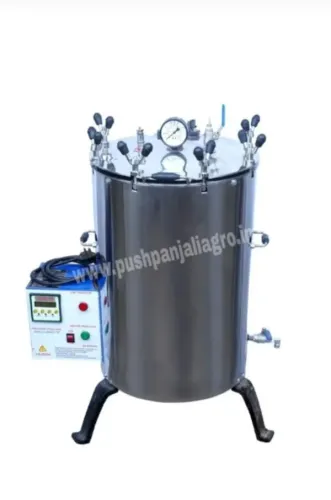
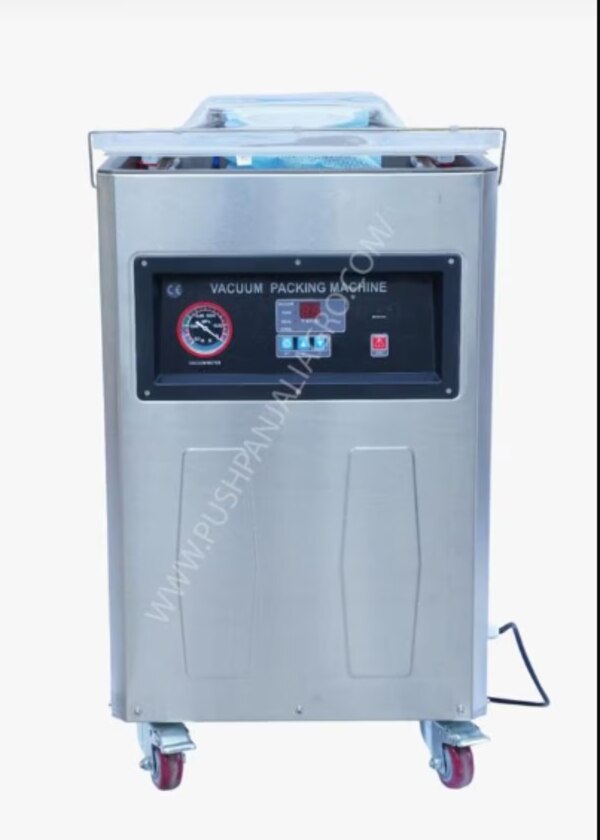
A standing chamber machine can reduce oxygen exposure, seal leakage, freezer burn, dehydration, odour transfer and uneven pack appearance, but only when the product, pouch and settings match. You will be able to identify which packaging failures it can correct, size a 400 mm machine against your actual packs, and test whether it protects tofu or paneer without damaging the product.
Key takeaways
- Match pouch width, product height and output before choosing 400 mm equipment.
- Use dry, aligned seals and cool tofu or paneer before packing.
- Test seal strength, vacuum consistency and product handling during the machine trial.
- A chamber machine reduces air, but it cannot repair punctured film or wet seals.
Which packaging failures does a standing vacuum machine actually fix?
A standing vacuum packing machine for packaging problems in ambala removes air from the complete pouch inside a chamber, then heat-seals it. That reduces oxygen exposure, oxidation-related colour and flavour loss, freezer burn, dehydration and odour transfer. It also gives tofu, paneer and chilled dairy packs a more consistent shape than hand-closing pouches.
| Problem | What the machine reduces | What still needs control |
|---|---|---|
| Air in the pouch | Headspace, oxidation and uneven presentation | Correct vacuum time and pouch placement |
| Leak-prone closure | Inconsistent sealing caused by poor manual closing | Clean seal area, correct temperature, dwell and cooling |
| Wet product handling | Liquid being pulled toward the pump compared with external suction | Drain surface water and keep the seal zone dry |
| Transport and freezing damage | Loose packs and excess air that worsen crushing or freezer burn | Suitable pouch thickness, loading and cold storage |
| Warm or contaminated food | Nothing | Hygienic handling, rapid chilling and cold-chain control |
A tight-looking pack does not prove safety. A channel leak or weak seal can open during transport, while vacuum sealing cannot sterilise tofu, paneer or dairy food, kill established microbes, correct contaminated raw material or stop growth in a warm product.
Commercial soya milk intended for ambient storage needs validated heat treatment plus hygienic or aseptic packaging, not ordinary vacuum packing.
For a vacuum packaging problems food business, treat the machine as an air-removal and sealing control, not a preservation system. Chill the product, drain it, protect the seal area, inspect every seal and move packs promptly into refrigeration or freezing.
Why do vacuum packs still leak, puncture or look uneven?
Most failed packs trace to the pouch, loading position or seal—not the vacuum level alone. A wet seal area prevents the heat-seal layers from bonding, while an incorrect temperature or dwell time creates a weak seal, melted film or a false seal that looks closed but opens under handling.
- Water, whey or oil on the seal zone: the film cannot fuse across the contamination.
- Heat set too low or dwell too short: the seal looks narrow and peels apart.
- Heat set too high or dwell too long: the pouch wrinkles, thins or burns at the seal.
- Tofu edges, paneer corners or hard fragments against the film: a puncture becomes a channel leak.
- Pouch folded, overfilled or poorly positioned: the seal bar closes across creases and leaves an uneven pack.
- Liquid pulled toward the chamber port: it can contaminate the vacuum line, filter or pump and reduce later performance.
Choose a food-contact pouch with a seal layer compatible with the machine’s heat range and dwell time. A thicker pouch alone will not solve sharp-edge punctures or a mismatched seal layer.
For a food business, vacuum packaging problems also hide behind a tight-looking pack. Inspect every seal for wrinkles, gaps and wet spots, then test sample packs after refrigeration, stacking and transport simulation; a corner leak often appears only after movement.
What is the correct tofu and paneer packing workflow?
Cool tofu or paneer before packing, then remove excess surface water. A vacuum packing machine for tofu works reliably only when the product is firm enough to handle and the seal area stays dry.
1. Drain the tofu or paneer until free whey or surface water no longer runs into the pouch. Wet product can contaminate the seal and cause leaks.
2. Select a food-grade pouch that fits the product without stretching, sharp corners or excessive empty space. Check that its material suits chilled or frozen storage.
3. Load each piece without touching the inner seal zone with tofu, paneer, whey, brine, curd particles or oil. Leave clearance around the product.
4. Lay the pouch mouth flat across the seal bar, with no folds or trapped product. Keep the open edge fully inside the chamber.
5. Set vacuum time and vacuum level for the product’s moisture, firmness and pouch size. Reduce the setting if liquid rises into the chamber or the tofu deforms.
6. Set sealing temperature, dwell time and cooling time from a trial using the actual product and pouch. A clean, dry seal needs a continuous bond without wrinkles, channels or burnt film.
7. Inspect every seal immediately. Reject packs with wet spots, trapped food, incomplete bonding, punctures or air returning after pressing the pouch.
8. Move accepted packs promptly into chilled storage or freezing. Vacuum does not sterilise tofu or paneer, stop growth in warm food, or replace cold-chain control.
Does a 400 mm machine fit your pouch, product and daily output?
A 400 mm seal bar does not guarantee a 400 mm pouch width or higher output. A vacuum packing machine 400 mm in Ambala fits only after you check the chamber drawing, bar layout and product clearance.
- Measure usable seal length between the bar ends; allow space for the pouch edges and confirm whether the stated length includes unusable corners.
- Check chamber width against the pouch’s flat width, then leave clearance around the loaded pouch so it does not touch the lid, nozzle or seal bar.
- Measure the packed product height, including folds and liquid, against the chamber height. A thick tofu block can prevent the lid from closing even when its pouch is narrow.
- Ask what “400 mm × 2” means. It often means two separate 400 mm seal bars, not one 800 mm seal.
- Confirm pump displacement, vacuum time and complete cycle time. Pump capacity alone does not predict output.
| Loading choice | What it means | When it applies |
|---|---|---|
| Single pack | One pouch per cycle; maximum space for a large product | Large tofu, paneer or cheese packs |
| Two packs | Two smaller pouches sealed in one cycle | Both pouches fit without blocking air removal or seal closure |
| Higher pump capacity | Faster air removal only if chamber loading permits it | Shorter cycles, after a product trial |
Calculate output from packs per cycle × cycles per hour, allowing for loading, unloading and chilling. A standing vacuum packing machine in Ambala should be tested with your actual pouch and product, not empty bags.
What should you demand in a machine trial before buying?
Reject any demonstration using empty pouches. For a standing vacuum packing machine in Ambala, demand a trial with your drained tofu, paneer, dairy or soya product, the intended pouch and a realistic chamber load. Ask Pushpanjali Industries to record measured results rather than provide only catalogue specifications.
| Supplier claim | What you must verify in the trial | Failure to watch |
|---|---|---|
| Vacuum level and time | Actual vacuum reading, seconds to reach it, product compression and whey loss | Crushed tofu or distorted paneer |
| Seal temperature, dwell and cooling | Settings, seal width, cooling seconds and seal appearance | False seals, wrinkles or wet seal contamination |
| Electrical load and cycle time | Running current, connected load, packs per cycle and recovery between cycles | Tripped protection or lower output than promised |
| Leak performance | Visual inspection, destructive seal test and leak check after refrigeration | Channel leaks hidden inside a wide seal |
| Transport durability | Recheck packs after stacking, vibration and simulated transport | Corner punctures or post-seal leaks |
- Drain the product, load the actual pouch without wetting its seal area, and run the planned production quantity.
- Weigh or measure product deformation after sealing; excessive vacuum is a quality defect, not a success.
- Refrigerate the packs, then perform a seal-strength or water-submersion leak test before and after transport simulation.
- Record product temperature after packing and confirm prompt chilling or freezing. Vacuum does not sterilise food or replace cold-chain control.
For a vacuum packing machine for tofu, require a gentler cycle or gas flushing option when appearance matters; thicker pouches alone do not guarantee a reliable seal.
Related product
 | Vacuum Packing Machine Standing 400 mmx2 Industrial Single Chamber Vacuum Packing Machine, specifically used for preserving food products like tofu, paneer, and processed meats by removing... View product → |
Frequently asked questions
Which packaging failures does a standing vacuum machine actually fix?
It removes air from the complete pouch before heat-sealing, reducing oxygen exposure, oxidation, freezer burn, dehydration and odour transfer. It also improves pack shape compared with hand-closing pouches.
Why do vacuum packs still leak, puncture or look uneven?
Common causes include wet or contaminated seal areas, unsuitable pouch film, sharp product edges, overfilling, poor pouch positioning and incorrect sealing settings. Vacuuming cannot fix damaged film.
What is the correct tofu and paneer packing workflow?
Prepare clean, suitably sized pouches; drain and cool the tofu or paneer; load without contaminating the seal area; position the pouch evenly; set vacuum and sealing parameters; then inspect the finished seal.
Does a 400 mm machine fit your pouch, product and daily output?
Check the usable sealing length against your pouch width, chamber clearance against product height and the machine cycle against your required daily volume. Include loading and unloading time in the calculation.
What should you demand in a machine trial before buying?
Run your own tofu or paneer, pouch film and product size. Check vacuum consistency, seal width, seal strength, pack appearance, product damage, cycle time and repeatability across multiple packs.
Keywords