The advertised LPH figure is only the starting point: your usable output also depends on batch cycles, cleaning, heating, cooling, filling and product losses. By comparing real shift capacity, raw-bean demand, labour, utilities and expansion needs, you can select a plant size that matches present sales without creating a bottleneck or paying for idle equipment.
Key takeaways
- Treat LPH as nominal hourly output, not guaranteed shift production.
- Choose capacity from sellable volume, shifts and peak-demand requirements.
- Confirm soybean consumption, process cycle time and filler speed before buying.
- Ask for a detailed utility, labour and equipment schedule with every quotation.
What the three LPH ratings actually deliver
| Rated plant | Nominal hourly output | Theoretical 8-hour shift | Packaged rate if filler matches |
|---|---|---|---|
| 100 LPH | 100 L | 800 L | 333 containers/hour at 300 mL; 200 at 500 mL |
| 180 LPH | 180 L | 1,440 L | 600 containers/hour at 300 mL; 360 at 500 mL |
| 250 LPH | 250 L | 2,000 L | 833 containers/hour at 300 mL; 500 at 500 mL |
These figures describe nominal finished-soya-milk throughput, not guaranteed saleable output. Soaking, formulation, heating, changeovers, cleaning, product loss and filling stoppages reduce the litres you can sell during an eight-hour shift. A 100 lph 180 lph or 250 lph soya milk plant must therefore be judged on a complete production run, not a short water trial.
Ask where the supplier measured LPH: grinder inlet, filtered-milk outlet, pasteurizer outlet or filler. The quotation must also state finished-milk temperature and total-solids content; otherwise two machines with the same rating may be producing different products.
Your saleable volume is the slower of the process line and packaging line, minus downtime and rejects. At 250 LPH, a filler limited to 400 containers per hour delivers only 120 LPH in 300 mL packs.
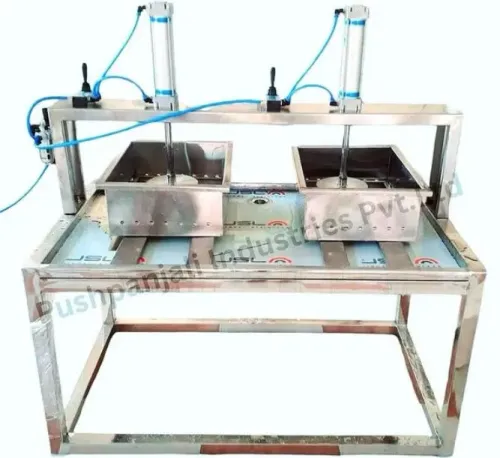
This soya milk plant capacity comparison also excludes tofu or paneer: coagulation, whey drainage and pressing require separate downstream capacity.
Choose capacity from sales, shifts and peak demand
Base the choice on saleable litres needed on your busiest delivery day, not on the machine’s hourly label. A nominal rating assumes continuous production; soaking, heating, filling, cleaning and product changeovers reduce what reaches customers.
| Capacity | 8-hour nominal output | Best fit | Main selection risk |
|---|---|---|---|
| 100 LPH | 800 L | One local route or limited filling demand | Manual loading and cleaning can consume much of the shift |
| 180 LPH | 1,440 L | Several routes with moderate daily demand | One undersized separator, tank or filler creates a bottleneck |
| 250 LPH | 2,000 L | High demand, multiple routes or planned expansion | Separation, heating, cooling and filling must all sustain the rate |
Calculate your route requirement by adding the litres promised to each delivery day, then add a peak-demand allowance for festivals, new customers or weekly order spikes. Choose a 100 LPH soya milk plant if that total fits within a shorter production window and you value smaller batches.
Choose a 180 LPH soya milk plant when demand no longer fits comfortably into one shift, but a 250 LPH line would leave equipment underused. Confirm that the rating applies at the filtered-milk outlet, pasteurizer outlet or filler—not merely the grinder inlet.
For growth, select the next size only when you have a credible sales pipeline or route expansion plan. Ask for demonstrated saleable output over a complete run, plus heat-up, cooling, filling and cleaning times; a short water trial can conceal lost production.
Calculate soybean demand and verify the process cycle
A 250 LPH soya milk plant is not proven by the number 250 alone. The quotation must state whether LPH is measured at the grinder inlet, filtered-milk outlet, pasteurizer outlet or filler, plus the finished-milk temperature and total-solids target. Without those details, a soya milk plant capacity comparison is unreliable.
Require this evidence before accepting the rating:
1. The recipe: specify the soybean-to-water ratio, soaking time, bean condition, and added water at each stage. Do not accept a generic “high-yield” claim.
2. The mass balance: show kilograms of dry soybeans and water entering, plus okara, process loss and finished milk leaving each batch. Define extraction yield as a percentage and identify whether it means liquid recovered or saleable milk.
3. The product target: state total solids and protein targets for ready-to-drink milk or concentrated base. A thinner product can produce more litres than a higher-solids formulation from the same beans.
4. The complete process cycle: document cleaning, soaking, wet grinding, heating or blanching, okara separation, formulation, homogenization or agitation, pasteurization, cooling, filling, cleaning and changeover. Include the time for every stage.
5. The measured output: demonstrate a complete run, not a short water trial. Record separator, heating, cooling and filler rates, then deduct stoppages, product loss and cleaning time to show saleable litres per hour. At 300 mL, 250 LPH requires about 833 filled containers per hour; the filler must match it.
Compare labour, equipment and utilities at each size
A manual 100 LPH soya milk plant needs more hands at soaking, grinding, filtration, transfer, vessel washing and filling. An auto-transfer 100 LPH line adds pumps, valves, sensors and interlocked controls, reducing handling and contamination points; it does not automatically increase the rated flow.
| Option | Labour and equipment | Utilities and practical effect |
|---|---|---|
| Manual 100 LPH | Operator-led loading and transfers; basic grinder, separator, vessels and filler | Lower initial batch volume, but water use, cleaning time and labour per litre are higher |
| Auto-transfer 100 LPH | Pumps and fixed piping move milk between grinder, separator, heater, cooler and filler | More equipment and controls, but steadier flow and less manual exposure |
| 180 LPH soya milk plant | Larger coordinated grinder, separator, heater, holding tank and filler | Needs higher electrical load, steam or heating capacity, cooling duty and floor space |
| 250 LPH soya milk plant | Larger vessels, transfer pumps, filler and cleaning circuits | Requires greater cooling capacity, finished-product storage and staging space before dispatch |
At 180 LPH, one undersized component turns the line into a bottleneck. A 250 LPH soya milk plant also creates longer holding and filling windows, so tank capacity and post-pasteurization hygiene deserve close checking.
Do not convert liquid throughput directly into tofu output. Tofu adds coagulation, curd handling, whey drainage and pressing; confirm separate downstream equipment, cycle time and expected kilograms per batch. A larger line can therefore produce more tofu only if those sections match its milk flow.
Demand the documents that make a quotation comparable
A quotation for a 100 LPH, 180 LPH or 250 LPH soya milk plant is comparable only when it defines where “LPH” is measured. Ask whether the figure applies at the grinder inlet, filtered-milk outlet, pasteurizer outlet or filler, and record the finished-milk temperature and total-solids content.
Request these documents before comparing prices:
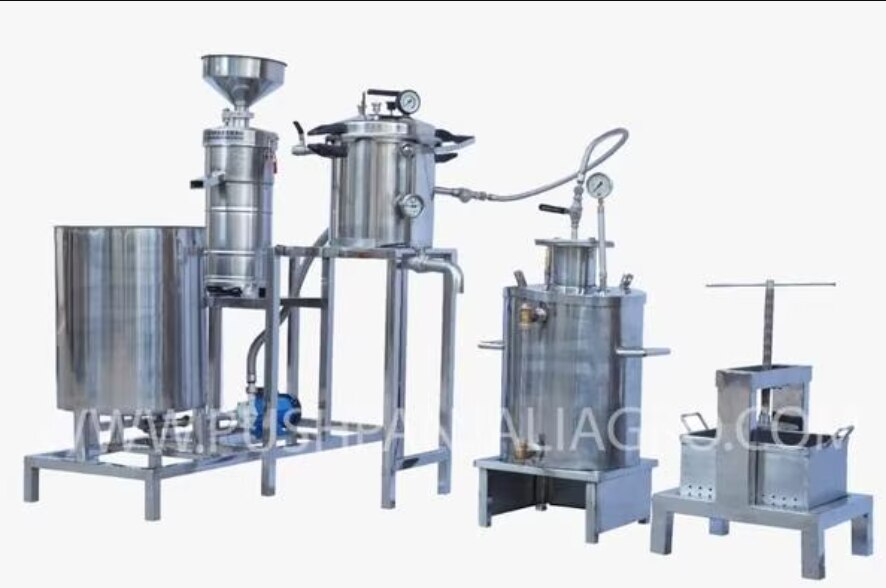
- A process-flow diagram showing grinding, filtration, separation, heating, holding, cooling, storage and filling.
- A component schedule stating the grinder, separator, heating vessel, holding tank, cooler and filler flow rates at the specified solids content and viscosity.
- A utility sheet showing electrical load, steam or thermal-oil demand, water, compressed air, cooling duty and wastewater, with vessel volume, starting temperature, target temperature and heat-up time.
- Material and hygiene records identifying product-contact steel grade, weld finish, drainability, gasket material, cleaning method and changeover procedure.
- A thermal-treatment sheet specifying temperature, holding time, cooling target, control sensor location and recording method.
- A performance protocol covering soybean recipe, extraction yield, saleable output, cleaning time and maximum continuous run.
| Document | What to verify | Why it matters |
|---|---|---|
| Capacity test | Product, temperature, solids and measurement point | A short water trial can disguise losses |
| Thermal record | Heat-up, hold and cooling times | A boiler rating alone proves little |
| Acceptance test | Separator, filler and complete-run output | A 250 LPH soya milk plant fails at its slowest stage |
Pushpanjali Industries can help validate the specification by matching the process flow, utility calculations and witnessed test run to your beans, recipe and packaging format. Get those assumptions written into the quotation.
Related products
 | Soya Milk Plant 150 LPH (Upgradable Model) Automatic Soya Milk and Tofu (Soya Paneer) Making Plant. This commercial-grade system is designed to automate the extraction, sterilization, and... View product → |
 | SS Soya Milk Plant 100 LPH (Auto-transfer) Upgradable ₹195000 Soya Milk and Tofu (Soya Paneer) Making Plant, a multi-stage industrial food processing system designed to produce plant-based milk and solidified... View product → |
Frequently asked questions
What does 100 LPH, 180 LPH or 250 LPH mean in a soya milk plant?
LPH means nominal litres per hour. At an eight-hour theoretical shift, the three ratings correspond to 800, 1,440 and 2,000 litres before cleaning, changeovers, downtime and other production losses.
How many containers can each soya milk plant fill per hour?
If the filler matches the plant output, a 100 LPH plant produces about 333 300 mL containers or 200 500 mL containers per hour. The corresponding figures are 600 and 360 for 180 LPH, and 833 and 500 for 250 LPH.
How should you choose between a 100 LPH, 180 LPH and 250 LPH soya milk plant?
Base the choice on confirmed sales, planned shifts, peak-day demand, available working hours and the output you can pack and sell. Do not choose from the hourly rating alone.
What should a comparable soya milk plant quotation include?
Request the rated output, soybean consumption, process-cycle times, equipment list, motor loads, steam or heating requirements, water demand, labour requirement, filler speed, installation scope and exclusions in writing.
Related products
 | SS Soya Milk Plant 100 LPH (Manual) Upgradable ₹165000 Soya Milk and Tofu (Soya Paneer) Making Plant. This is a semi-automatic industrial setup designed to process raw soybeans into milk and solidified... View product → |
 | SS Soya Milk Plant 250 LPH (Upgradable Model) ₹340000 Soya Milk and Tofu (Soya Paneer) Making Plant, a multi-stage industrial food processing system designed to produce plant-based milk and solidified... View product → |
 | SS Soya Milk Plant 180 LPH (Upgradable Model ₹240000 Soya Milk and Tofu (Soya Paneer) Making Plant, a multi-stage industrial food processing system designed to produce plant-based milk and solidified... View product → |
Keywords